The Narrative Architecture of Aetheris
How Aetheris replaces the traditional quest log with a world that advances through consequence, myth, and irreversible transformation — told through the story of Kaelen Thorne and the land she reshapes.
Category
Design
Reading Time
12 Min
Date
Feb 12, 2026
The Problem With Traditional RPG Narrative
Most RPGs treat story as a track. You follow it. You complete objectives. You are rewarded. The world waits for you to act, and nothing meaningful changes unless you check a box.
Aetheris was designed to reject that model entirely.
The central question behind the narrative architecture was: what if the world didn't care about your quest log? What if it moved, changed, and remembered — and the player had to deal with the consequences of being part of a living system rather than the center of a scripted one?
That question shaped everything.
Kaelen Thorne — A Protagonist Designed as a System
Kaelen Thorne is a 17-year-old fugitive from a collapsed noble house in Southern Keltus, bound to an Ashfang wolf named Veyr and carrying the weight of a legacy she didn't choose. She begins the game undefined — not as a blank slate, but as a person whose identity is still forming.
The player doesn't choose "good" or "evil." They define who Kaelen becomes through five dynamic personality traits based on the Big Five psychological model: Openness, Conscientiousness, Extraversion, Agreeableness, and Neuroticism. Every action, every conversation, every moment of silence shifts these traits — and the world responds not to what Kaelen did, but to who she is becoming.
This is not a morality system. It's an identity system. NPCs don't react to a binary alignment — they react to a personality constellation. A highly open, low-conscientiousness Kaelen will attract different allies, unlock different abilities, and be perceived differently by factions than a disciplined, introverted one. The same quest can carry radically different weight depending on who Kaelen has become by the time she reaches it.
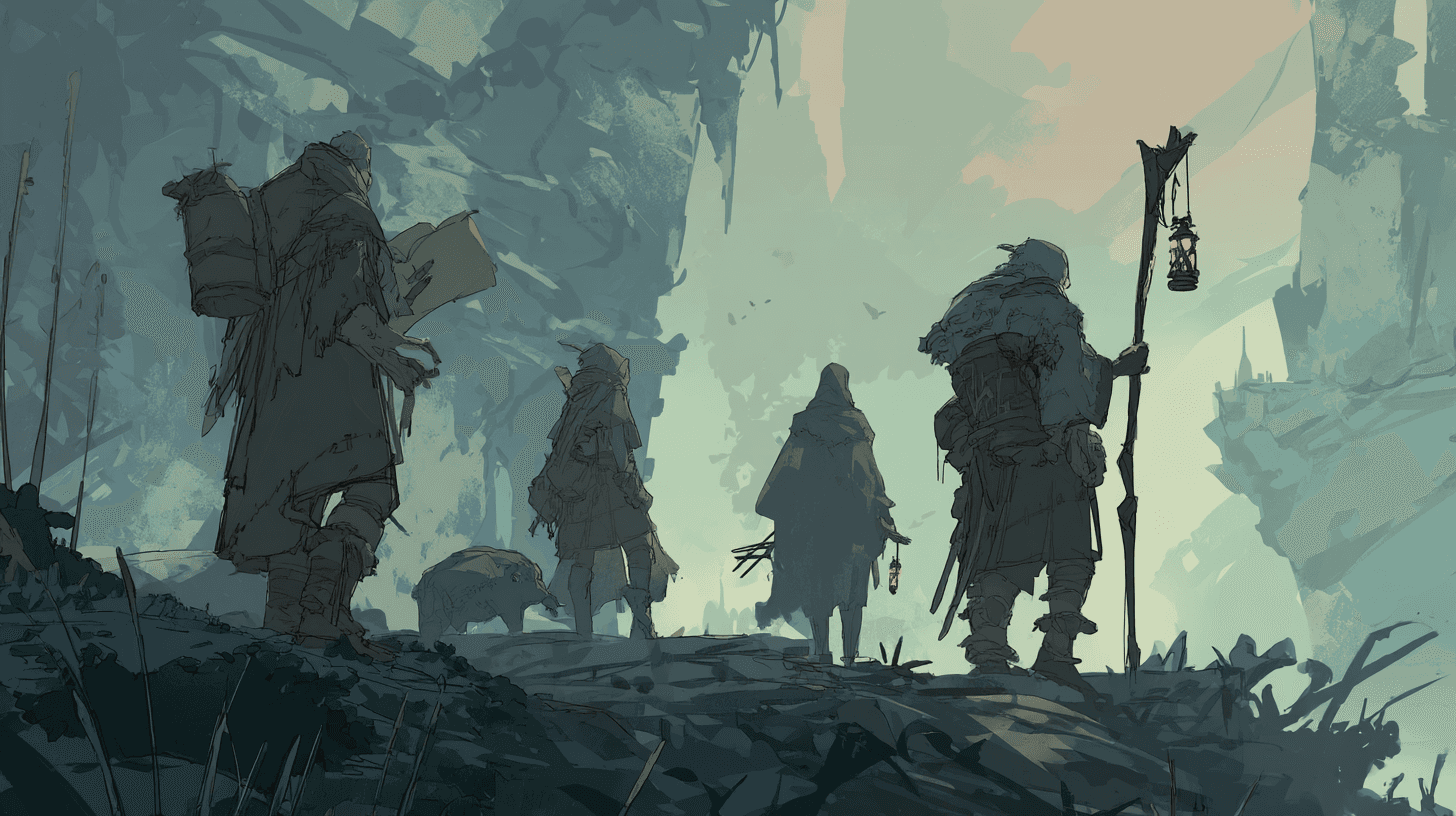
Her squad reinforces this. Maera, a disciplined hunter from Brelgaarde, serves as Kaelen's shield — stoic, brutal, and bound by blood oaths. Tarin, a blind mystic from Ternwaith, sees echoes in silence and remembers futures others forget. Veyr, the Ashfang wolf, is immune to corruption — the one constant in a world that shifts around you. The squad is non-swappable. They are not party members to be optimized. They are relationships to be navigated.
Maera may support an Order alignment if it means protecting civilians. Tarin may become unstable if forced to deny spiritual visions. You shape the squad — but the squad shapes you back.
The Five-Act Structure — Not a Rails, But a Pressure System
Aetheris follows a five-act campaign structure, but it is not linear in the traditional sense.
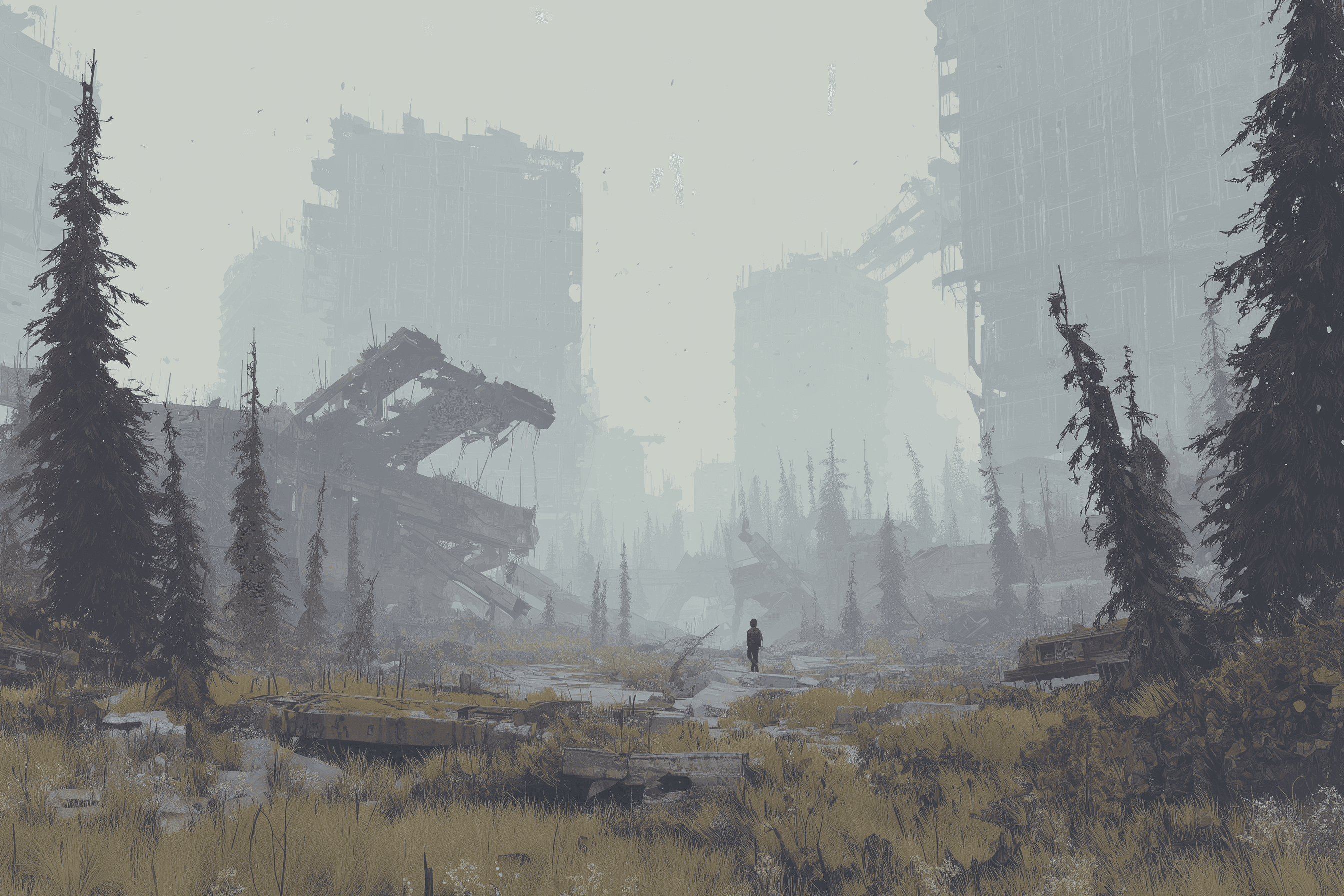
Act I — "Exordio d'Ignora" (The Ignorant Beginning) drops Kaelen into the ruins of Southern Keltus. The player learns the world organically: investigating collapsing ruins haunted by false memories, encountering the Soul Auction for the first time, hearing rumors of the Order. Alignment begins to form through subtle tests — helping a wounded Order scout, accepting a rebel escort, stealing Kyadamri intel. None of these are flagged as "alignment choices." They simply are choices, and the world remembers.
Act II — "Junctura d'Spirito" (The Spiritual Crossroad) forces confrontation. The player attends a soul auction under disguise and each faction makes an offer, revealing what they see in Kaelen. This is where the player locks into a path — and that lock reshapes outfit, NPC reactions, available quests, and the entire campaign trajectory.
Act III diverges completely by faction. A Keltus-aligned Kaelen navigates deep forest sanctuaries and mythic beast conflicts. A Kyadamri-aligned Kaelen deals with dust markets, betrayal rituals, and veiled cities. An Order-aligned Kaelen faces heresy trials and council intrigues. The squad reacts uniquely to each path — Tarin thrives in Kyadamri stealth operations, Maera resents the Order but adapts.
Act IV — "Veritas d'Ruptura" collapses the player's certainties. The truth about Kaelen's origins, Veyr, and the Eternal Beast emerges through forbidden regions and Worldroot fragments. Allies may turn. The Order might see Kaelen as a weapon. Keltus may fear her nature. Kyadamri may want to sell her name.
Act V — "Forma d'Era" is the convergence. War erupts. Every faction calls for Kaelen's hand or death. The final choice is not about saving the world — it's about what kind of world survives.
The endings are not "good" or "bad." They are configurations — states the world can or cannot sustain based on every decision that preceded them.
Design Pillars That Shape the Narrative
Several core design pillars ensure the narrative stays coherent across this level of player freedom:
The World Advances, Not the Quest Log. Narrative momentum comes from changes in the world itself — shifting power, altered perception, irreversible consequences. Progress is measured through world state, not task completion.
Quests Are Commitment Tests. Every meaningful quest answers a single question: what are you willing to be responsible for? There are no quests designed to pad content. Narrative actions fall into three categories: Alignment Commitments (which place Kaelen publicly and close future paths), Myth Catalysts (which distort reputation, often without consent), and System Interventions (which alter how the world functions rather than advancing a storyline).
Silence Is a Valid Response. Kaelen can choose not to speak. This is not a non-choice — it's a defining one. In a world where visibility has weight and inaction is interpreted, saying nothing carries as much consequence as any dialogue option.
Irreversibility. All meaningful actions permanently alter the world. Paths close, interpretations harden, and nothing fully returns to neutral. Some quests and characters can be permanently missed. This is not punishment — it is the cost of choice in a world that takes the player seriously.
The Final Test: The design of Aetheris is sound if a player can realize, too late, that doing nothing was a defining choice.
Faction as Narrative Identity
Aetheris features two major power structures — the Order of the Black Heron and the Rebel Fronts — each with internal complexity that prevents simple "good vs. evil" framing.
The Order of the Black Heron is an oppressive theocracy structured around four elite arms: the First Hand (honor-bound knights), the Divine Hand (ritual priests), the Tainted Hand (inquisitors wielding madness), and the Silent Hand (spymasters who erase memories). Aligning with the Order doesn't make Kaelen evil — it gives her access to structure, resources, and the ability to reform from within. But it also makes her complicit.
The Rebel Fronts span five culturally distinct factions: Keltus guerrilla druids, Styrka berserker flamebloods, Kyadamri dust illusionists, Nath oath-bound undead, and Lythir astral monks. Each offers different tools, different philosophies, and different costs.
Alignment is not a meter. It is interpretation — how the world reads Kaelen's presence and actions. Locally, interpretation is nuanced. At distance, it becomes myth: simplified, distorted, and dangerous.
The Soul Economy — Currency of Consequence
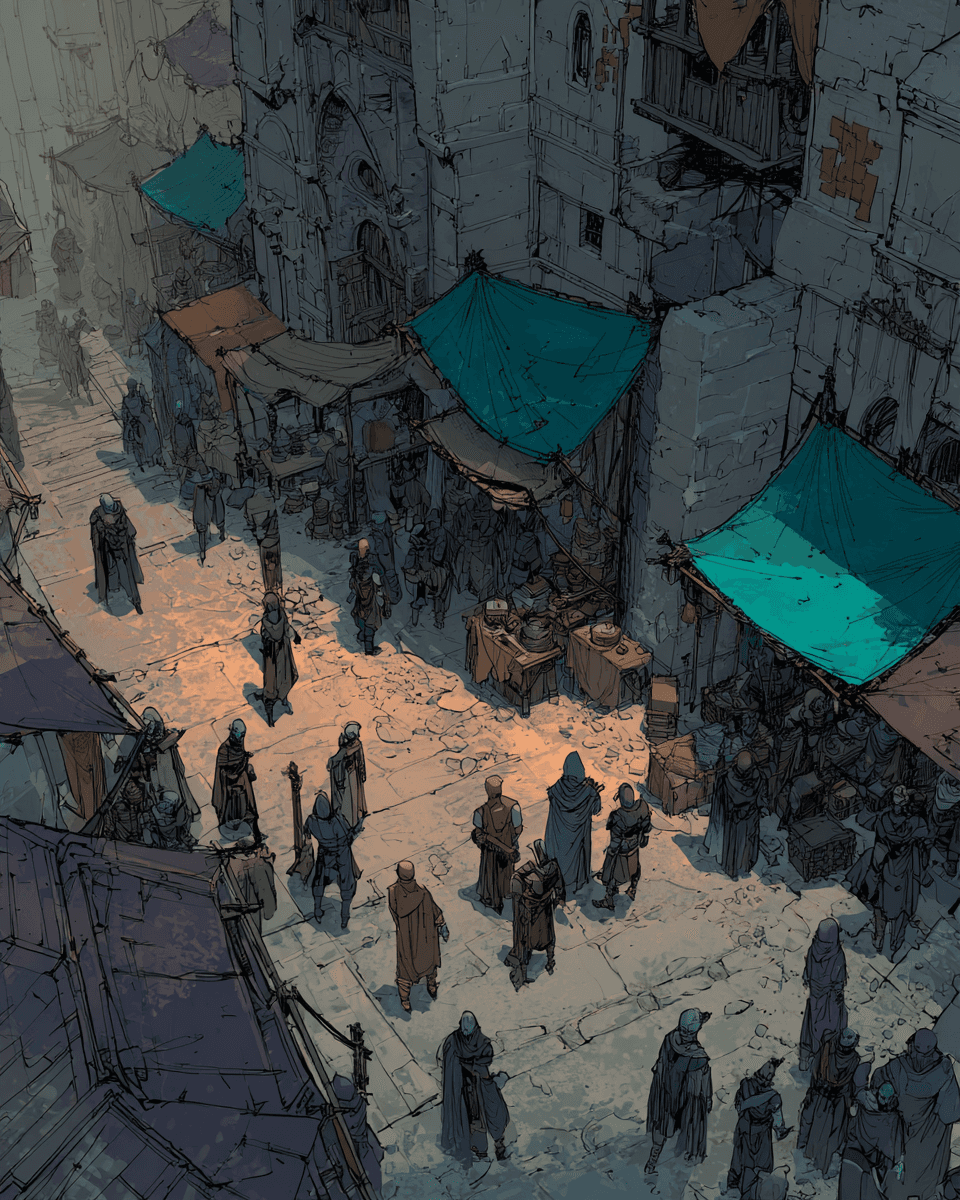
The Auction of Breath is a roaming soul bazaar where Kaelen trades contracts for forbidden power. It is not a shop. It is a narrative system.
Soul trading is tracked through a Resonance Meter that enables deeper spiritual interactions — dream visions, echo paths, connections to the Worldroot. There is no morality penalty for trading souls. There is only resonance and consequence. What you trade away changes what you can perceive. What you gain changes how the world perceives you.
The Auction moves — sometimes in deserts, sometimes under moonlight, sometimes in memory. Finding it is itself a narrative act. What you do there defines your relationship with the spiritual architecture of the world.
What This Means for the Player
Aetheris is not about right or wrong. It's about what survives: a memory, a myth, a name whispered in the ruins.
You play not just to shape Kaelen — but to shape the world's ability to remember her.
The squad doesn't just follow you. They believe in you. Or fear you. Or leave your name behind in the dirt.
At its center, Aetheris asks one question: What kind of power are you willing to become in order to reach what you want?
Everything else — combat, cities, factions, myths — exists to force the player to answer it.
Related Articles